Rat control in Breda: what to look for
The brown rat is the species we meet most in the Netherlands, both outdoors and indoors. It is far larger than a mouse, has a thick scaly tail and is shy by nature. Usually you notice the signs first:
- droppings of one to two centimetres, often in small clusters
- burrows in the ground with a smooth, worn entrance
- regular runs through grass or along a wall
- gnaw marks on wooden doors, plastic pipes or feed bags
- scratching in a suspended ceiling, cavity wall or crawl space
Rats are clever and wary of anything new in their surroundings, which is why home-set traps often fail to catch them.
Where rats come from
A rat indoors has usually come from the sewer. A broken pipe under the floor, a loose joint in the crawl space or an open drain in the utility room is an open door to it. Outdoors they are drawn by food: a bird table with spilled seed, a chicken run, an open compost bin or bin bags left out overnight.
Rats can spread diseases such as Weil's disease, and they gnaw through cables and pipes. A rat problem does not resolve itself; as a rule it keeps growing for as long as the source remains.
How we carry out rat control
We start by asking how the rat gets in. If the sewer is the source, we advise fitting a rat flap, a one-way valve in the drain that stops rats coming back up, and if needed a camera inspection by a drainage specialist to locate the damaged section. Holes in walls and floors are sealed with gnaw-proof materials.
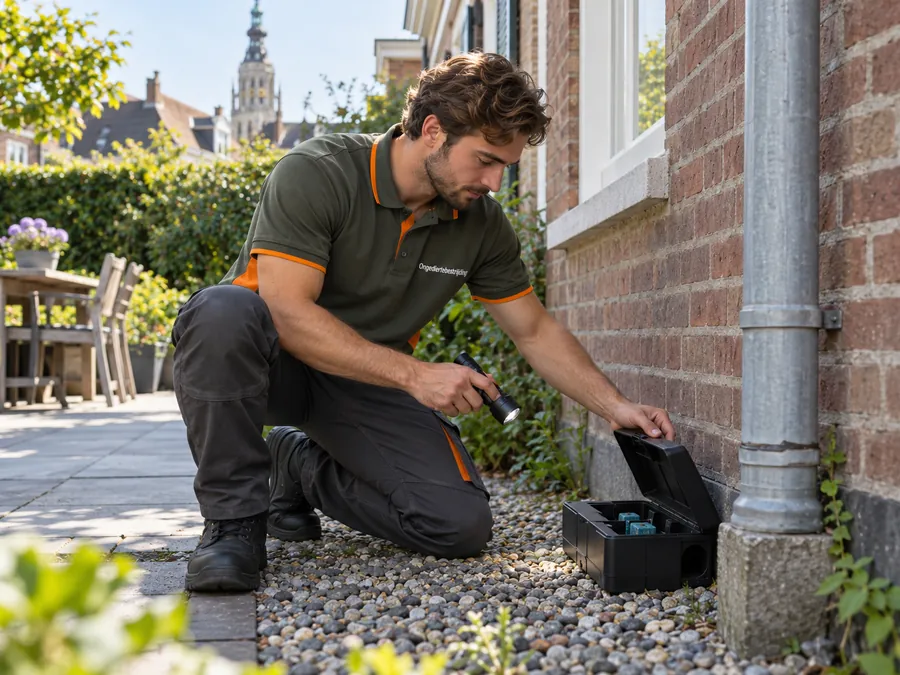
At the same time we deal with the rats that are already there, using traps or professional bait in secured bait stations, which only certified pest controllers may use. At the check-up we confirm that activity has stopped. Treating rats without removing the cause achieves little, so we always combine the two.
What you can do, and what to leave to us
Take away food sources: feed birds from a table with a catch tray, bring chicken feed indoors at night, use a closed compost bin and only put rubbish bags out on collection day. Cut back plants along the walls so rats have fewer places to hide.
Do not fill in burrows before we know where the rats are, and never put loose poison down in the garden. Other animals may eat it, and a poisoned rat sometimes dies under the floor. If you are hearing smaller rodents indoors, our page on mouse control will help. Rats in a park, by the water or on the street should be reported to the gemeente Breda.
After treatment: keeping rats away
Once things are quiet, prevention takes over. A rat flap in the drain connection, air bricks covered with metal mesh and a crawl space without open pipe gaps keep rats outside. In the garden, tidiness makes the difference: no piles of wood or rubble against the shed, animal feed in metal bins and fallen fruit cleared up every day.
Dealing with other pests too, or not sure what you are seeing? Our page on pest control in Breda covers everything we do. If you want the rats to stay away, these steps matter just as much as the treatment itself.