Mouse control in Breda: reading the signs
You rarely see mice, but you will see what they leave behind. They are mostly active in the evening and at night and keep to the same routes along walls and pipes. Look out for:
- small dark droppings, roughly the size of a grain of rice
- gnaw marks on packaging, cables or insulation
- dark greasy smears along skirting boards and around holes
- scratching and scurrying in the ceiling, cavity wall or crawl space
- a nest of shredded paper, fabric or insulation
The more fresh droppings you find in different places, the more likely it is that a sizeable group has already moved in.
How mice get into your home
A house mouse can squeeze through a gap of around 6 mm. That might be a gap under the front door, an unfinished pipe opening behind the washing machine or the hole around a central heating pipe. From the crawl space they climb up through service ducts, and via the cavity wall they can even reach the loft. Once the weather turns cold in autumn, they come indoors in search of warmth and food.
Mice gnaw constantly, electrical cables included, and leave urine and droppings wherever you keep food. Waiting only makes it worse: a couple of mice in October can be a large family by midwinter.
Our approach to mouse control
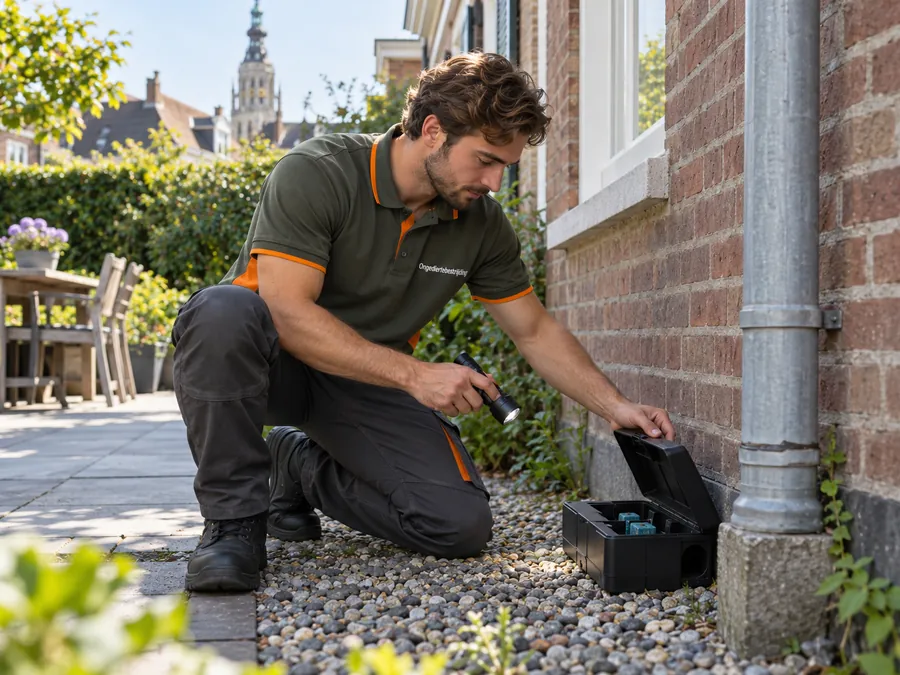
During the inspection we follow the trail back to the source: where the nests are, where the mice run and where they get in. Then we work on two fronts at once. We close openings with materials a mouse cannot chew through, such as steel wool, metal mesh, mortar or a brush strip under the door. And we deal with the mice already inside, using traps or professional bait in lockable bait boxes, products that only certified pest controllers may use.
On a check-up visit we look for any remaining activity and collect the bait boxes. The job is only finished once the house is genuinely quiet.
What you can do yourself, and what to avoid
There is plenty you can do to give mice no chance. Store food, bird seed and pet food in sealed glass or metal containers, wipe up crumbs straight away and do not leave rubbish bags open in the utility room. A simple snap trap with a dab of peanut butter works well for a single mouse.
Avoid scattering shop-bought poison around the house. A poisoned mouse often dies somewhere you cannot reach, which causes a smell, and pets or children may get to it. If the gnawing sounds heavier or the droppings are larger, have a look at our page on rat control as well. More about how we work can be found under pest control in Breda.
Keeping mice out after treatment
Getting rid of mice is one thing; keeping them out matters just as much. After treatment we give you an overview of your home's weak spots. They tend to be the same few places:
- air bricks and vents without fine mesh
- pipe openings in the crawl space and meter cupboard
- gaps under external and garage doors
- ivy or shrubs growing against the walls
Ideally deal with these before autumn, so your home is ready before the mice start looking for a way in.